
New FASD research reveals differences in the support networks surrounding pregnant women in South Africa
Johannesburg, 01 September 2026: Pregnant women living in urban and rural
communities may be navigating very different support systems, according to new research
by AWARE.org, with urban respondents far more likely to identify a lack of partner support
as a key challenge, while rural communities place greater emphasis on family and friends.
The 2026 Sober Pregnancies Report, commissioned by the organisation through Frontline
Research Group, found that 59% of urban respondents identified a lack of partner support as
a key challenge facing expectant mothers, compared with just 21% who cited a lack of
support from family and friends. In rural communities, the picture is different, with 32%
identifying a lack of family and friend support as a key challenge.
The divide is also reflected in who women consider most important during pregnancy. Rural
women are considerably more likely than urban women to identify their partner as the most
important source of advice and support, 43% compared with 25% among urban women.
The findings raise questions about whether changing family structures and urbanisation are
reshaping the support available to women during pregnancy, and what this means for efforts
to prevent Fetal Alcohol Spectrum Disorder (FASD).
“Where a woman lives can influence the support network around her during pregnancy,”
says Mokebe Thulo, CEO of AWARE.org. “These findings show that we cannot assume that
every woman has the same people to turn to or faces the same pressures. If we want to
support healthy pregnancies, we as society need to understand these differences.”
The research is particularly relevant to FASD prevention because alcohol use during
pregnancy does not happen in isolation. Social norms, relationships and the support or
pressure, women experience from those around them can influence their ability to maintain a
sober pregnancy.
Nationally, more than half of respondents identified a lack of support from a partner or
husband as a key challenge facing expectant mothers. At the same time, more than half said
women turn to their mothers or older female relatives for advice and support, compared with
only 27% who identify a nurse or doctor at a clinic as the most important source of advice.
In urban areas, where extended family networks may be less accessible, the partner
appears to carry greater expectations as a source of support. The report notes that
urbanisation can contribute to the “nuclearisation” of families, meaning that when a partner is
not supportive, there may be fewer alternative sources of support available.
In rural communities, meanwhile, family and friend support appears to remain more
prominent, although the research also indicates that these wider networks may themselves
be under pressure.
“The findings should not be interpreted as saying that rural women have stronger support
systems or that urban women are inherently more isolated,” says Thulo. “Rather, they show
that women may experience different forms of vulnerability depending on their environment.
This distinction matters in preventing FASD and supporting sober pregnancies.”
The research also highlights the importance of social environments in shaping attitudes
towards abstinence. While 56% of respondents believe friends and family would support an
expectant mother who chooses to stop drinking, many also believe those same peoplewould continue drinking around her.
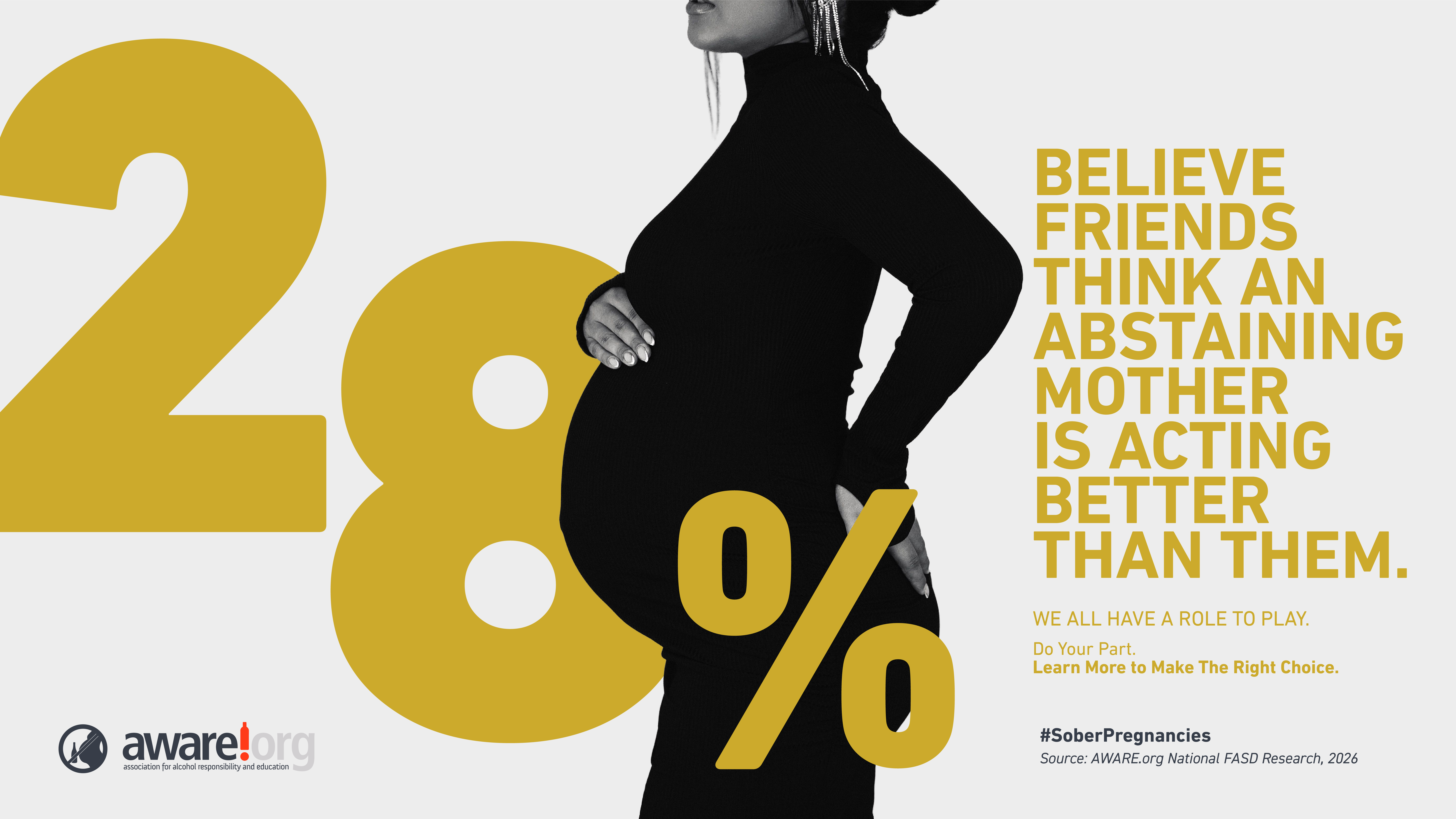
Twenty-eight percent say friends and family may view a
woman who abstains as being too serious or acting better than others, while 26% believe
family members may pressure a pregnant woman to have a drink to help manage stress.
This suggests that support cannot simply mean encouraging a woman to make a healthy
choice but rather creating an environment that makes that choice easier to maintain.
“FASD prevention cannot focus on pregnant women alone. It requires a whole-of-society
approach. The people around an expectant mother need to understand the importance of a
sober pregnancy and actively support that decision,” Thulo concludes.
The findings highlight that pregnancy support looks different across South Africa’s urban and rural communities. While urban women may rely more heavily on partners, rural women appear more likely to draw on family and friends. These differences reinforce the need for FASD prevention efforts that recognise the social environments surrounding women, rather than placing responsibility on pregnant women alone.


.webp)
