Drinking and driving remains one of South Africa's most persistent and preventable road
safety challenges. Reducing drinking and driving requires coordination, shared accountability
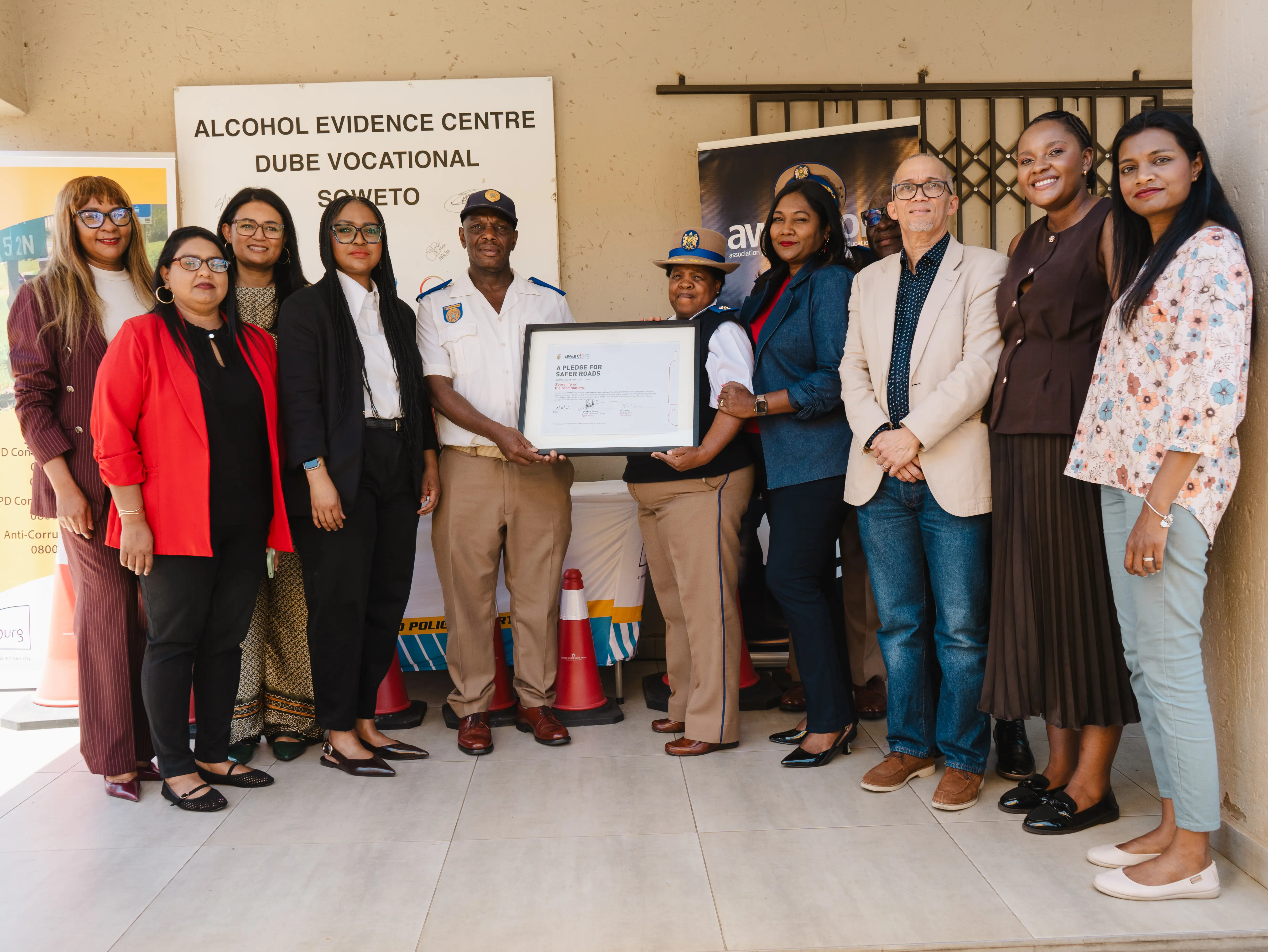
and a commitment to learning. To that end, AWARE.org and the Johannesburg Metropolitan
Police Department (JMPD) have launched Drive Sober, Stay Alive, a six-month initiative that
brings together government, law enforcement and civil society in an evidence-led effort to
make Johannesburg's roads safer.
Running from June until the end of December 2026, the initiative will combine strategic
planning, operational enforcement, public education and real-time research to better
understand and reduce alcohol-related road incidents. The programme will focus on high-
risk periods such as public holidays, long weekends, winter festivities and the festive
season, while also monitoring lower-risk periods to build a comprehensive understanding of
driving and alcohol consumption patterns throughout the year.
This intervention brings together key departments and partners within the City of
Johannesburg. The initiative will help streamline coordination and assess whether a
structured, collaborative approach can deliver stronger and more sustainable road safety
outcomes. Ultimately, the initiative aims to reduce drunk driving incidents and strengthen
overall road safety in support of the 2030 goals of reducing road fatalities and serious
injuries by 50%, as outlined in both the National Road Safety Strategy and the United
Nations Global Road Safety Strategy.
“Through the Drive Sober, Stay Alive initiative, AWARE.org is demonstrating its commitment
to a more coordinated and evidence-led response to drinking and driving. Our goal is to
generate practical evidence that can help strengthen interventions, improve accountability
and inform South Africa’s broader response to drunk driving,” said Mokebe Thulo, CEO of
AWARE.org.
The initiative builds on recommendations from AWARE.org’s 2025 Don’t Drink and Drive
Seminar, which brought together government, law enforcement, civil society and road safety
experts to explore practical solutions for reducing alcohol-related harm on South Africa’s
roads.
The need for stronger intervention is clear. JMPD data shows that DUI arrests increased
from 8,287 in 2023 to 9,898 in 2025, while evening hours between 18h00 and 23h59
continue to account for the highest concentration of arrests. The data also points to a
gradual increase in average alcohol levels among offenders over the same period.
Roadblocks have also become increasingly important in enforcement operations, accounting
for more than 72% of DUI arrests in both 2024 and 2025, compared to just over 50% in
2023. The data also shows that the majority of offenders fall within the 25–44 age category,
while males account for approximately 94–96% of arrests.
“Drunk driving remains a serious and entirely preventable threat on our roads. Through Drive
Sober, Stay Alive, JMPD is strengthening data-driven enforcement and using evidence to
guide operations that prioritise public safety and save lives,” said Johannesburg Metropolitan
Police Department (JMPD) Spokesperson, Xolani Fihla.
Central to the initiative is the use of Evidentiary Breath Alcohol Testing (EBAT) machines,
which provide court-admissible breath alcohol readings at the point of arrest.
The technology helps address one of the longstanding challenges in South Africa’s drunk-driving
enforcement process by strengthening the link between arrest, prosecution and
accountability.
Beyond enforcement, the initiative seeks to better understand the journey through the justice
process, from arrest through to prosecution and, where appropriate, rehabilitation or
alternative resolution pathways. Courts and rehabilitation partners will work together to
improve accountability and strengthen case follow-through.
The initiative will also incorporate ongoing research and analysis throughout the six-month
period. Data gathered during enforcement operations will be used to assess trends, identify
behavioural patterns and inform future interventions. This will create a continuous feedback
loop between action and learning, ensuring that interventions are informed by real-world
evidence. Insights generated through the programme will contribute to future road safety
policy discussions, operational planning and decisions around scaling similar interventions
nationally.
Beyond enforcement, the initiative seeks to better understand the journey of offenders
through the justice process, from arrest through to prosecution and, where appropriate,
rehabilitation or alternative resolution pathways. The programme will monitor key indicators
including DUI arrest trends, public awareness levels, behavioural patterns and attitudes
towards drinking and driving.
As the initiative rolls out, members of the public are encouraged to play an active role in
improving road safety by planning ahead, using e-hailing services, appointing designated
drivers and making responsible decisions around alcohol consumption. Public awareness
and personal accountability remain critical to reducing alcohol-related harm and saving lives
on South Africa’s roads.
By combining stronger enforcement, ongoing research and public participation, the Drive Sober, Stay Alive initiative aims to create lasting behavioural change and contribute to safer roads across Johannesburg. The programme seeks to generate valuable evidence that can inform future road safety interventions while encouraging every road user to play their part in preventing alcohol-related harm.