
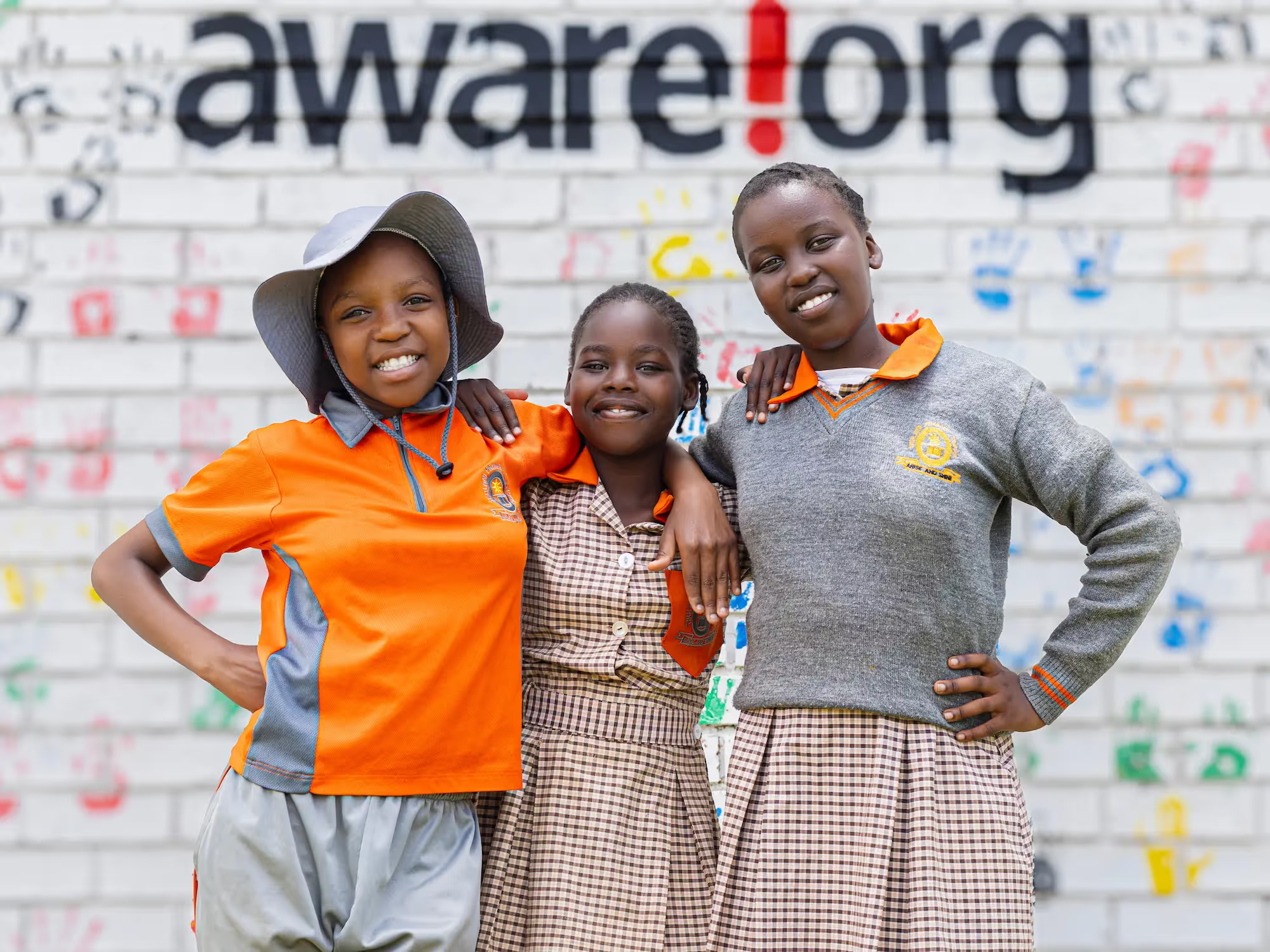
Now that the school year is well underway, there has been space to reflect on the quiet power of its beginning. The still- shiny polish of new shoes. The crisp feel of a new uniform. The flutter of nerves mixed with excitement as learners walk through the school gate - moments full of hope and possibility. For parents, carrying its own weight as routines settle back, lunchboxes are packed. Beneath it all sits a quiet, persistent question: How do I keep my child safe in a world that feels increasingly uncertain?
At AWARE.org, we speak to parents across South Africa every day. Many are juggling multiple jobs, navigating financial strain, and carrying the weight of providing not just materially, but emotionally. And among their many concerns, parents often return to the same worry of how to protect their children from underage drinking. The burden of underage drinking does not fall squarely on the shoulders of our children - it is a societal one. Curbing it requires the active involvement of all of society. But on a deeper level, the active commitment to a solution by parents and caregivers. Being engaged and present is far more important than being a model parent, although this is no doubt a substantial portion of what is required.
Family dynamics are often complex, intergenerational conversations are uncomfortable, and young people experience feelings of helplessness, which cannot be ignored; this can push them towards risky behaviours.
By age 13, almost 19.9% of young people have had their first drink. Behind that statistic are children navigating peer pressure and trying to find their footing in a world that moves faster than many can keep up with.
Going back to school is about more than academic preparation. It is an opportunity to reset. It is a moment to set small, intentional boundaries, model behaviour, and have honest conversations. Tackling underage drinking is not about being the perfect parent. It can start with creating structure, building boundaries, and speaking openly. It’s about creating safe communication moments, spaces. It’s also about signalling to where additional trusted resources may be found. These are not grand gestures, but they bear fruit over time.
Through our Makers of Tomorrow (MOT) initiative, we have seen how powerful young people can be when given support. When we met young people where they are – on a gaming platform like Roblox – over five million South African players encountered a world built around their choices. Across the broader MOT campaign, 80% of surveyed youth reported a positive shift in attitudes toward sober behaviour. Learners are stepping up as positive role models, choosing focus over distraction. They do so not because they are being preached to, but because they feel seen, valued, and equipped.
This kind of deep impact work compounds over time and requires the collective effort of parents, teachers, caregivers, and community members. Each of us has a role to play. For parents, that role does not require having all the answers. It is something simple but not easy. It requires showing up, being present, and consistent where you can, and creating space for your child to come to you when things feel difficult.
Protection is not about control. It is about creating an environment where children feel safe enough to make good choices, where saying no to alcohol is encouraged and understood, and where their focus can remain on learning and pursuing their dreams.
As the back-to-school dust has settled, we want parents to know they are not alone.
Organisations and partners such as AWARE.org will continue walking alongside parents and learners through interventions like MOT Chats, peer-led engagement, and community partnerships. It begins with one conversation at a time, one day at a time. This is how we shift norms, build protective environments and save lives.
Parents do not need perfect answers to make a difference. Showing up, staying present, and keeping communication open can shape the choices young people make every day. With the support of communities, schools, and initiatives like Makers of Tomorrow, small moments of guidance become lasting protection. Real change begins with one conversation, one boundary, one day at a time.
.webp)

